
Instead of racing across Vietnam, a New Zealand family found slow travel in Hoi An more rewarding—highlighting a shift in global tourism.
As travelers increasingly swap fast-paced itineraries for deeper, more meaningful experiences, Vietnam’s UNESCO-listed town of Hoi An is emerging as an unexpected winner. A New Zealand family who ignored recommendations to visit multiple Vietnamese destinations instead spent their entire 11-day holiday in Hoi An—and says it was one of the best travel decisions they have ever made.
For Kerri King and his family, Vietnam’s famous multi-city route—including Hanoi, Ho Chi Minh City and Phu Quoc—was never the priority. Traveling with their nine-year-old daughter, they chose to minimize long transfers and base themselves entirely in Hoi An, a historic riverside town in central Vietnam just 45 minutes from Da Nang International Airport. What began as a practical decision quickly evolved into an immersive cultural experience that challenged the idea that travelers must “see everything” to truly experience a country.
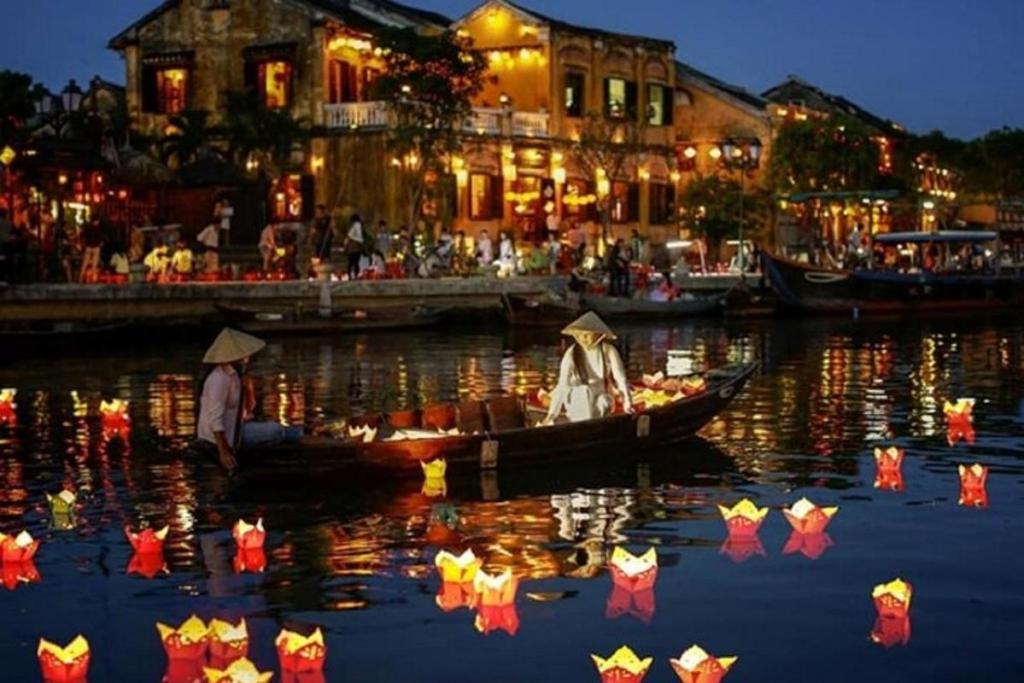
Their days followed a relaxed rhythm rarely associated with modern international travel. Mornings were spent at An Bang Beach, afternoons wandering Hoi An’s lantern-lined Ancient Town, and evenings enjoying the Thu Bon River after the crowds had thinned. Convenient ride-hailing services, complimentary bicycles from their hotel, and the town’s compact layout made it easy to explore without the stress of constant transportation. Rather than spending hours in airports, buses or domestic flights, the family invested their time in experiencing everyday Vietnam.
Food became one of the journey’s defining highlights. While Vietnamese banh mi remains internationally famous, King says local specialties such as cao lau noodles and Hoi An chicken rice left an even stronger impression. Vietnamese coconut coffee, iced milk coffee and herbal tea from the iconic Mot tea shop became daily rituals, inspiring the family to continue buying Vietnamese coffee after returning home.
 100vw, 1024px”><figcaption class=) Hoi An
Hoi AnBeyond its cuisine, Hoi An’s traditional craft villages offered the cultural depth many international travelers seek. The family learned pottery-making in Thanh Ha Village, explored centuries-old silk production, crafted their own lanterns, observed woodcarving in Kim Bong Village and purchased handcrafted bronze products from Phuoc Kieu. Instead of collecting conventional souvenirs, they returned home with handmade items that remain part of their daily lives. One of the trip’s standout moments was attending the large-scale Hoi An Memories outdoor performance, which recreates the city’s history as one of Southeast Asia’s most important trading ports.
The family’s experience also challenged common concerns about traveling in Vietnam with young children. While busy traffic initially worried them, Hoi An’s pedestrian-friendly Ancient Town, family-oriented workshops, and warm hospitality quickly eased those fears. Hotel staff braided their daughter’s hair, local tailors offered travel advice like longtime friends, and interactive cultural activities allowed children to participate rather than simply observe.
As Vietnam continues to attract record numbers of international visitors, stories like this suggest the country’s competitive advantage may extend beyond famous landmarks or affordable prices. Increasingly, it lies in the ability to slow visitors down. In an era when overtourism is reshaping global travel, Hoi An demonstrates that spending more time in one destination can create richer memories than checking off multiple cities—and that may become one of Vietnam’s strongest tourism assets in the years ahead.
Related
Discover more from Vietnam Insider
Subscribe to get the latest posts sent to your email.