
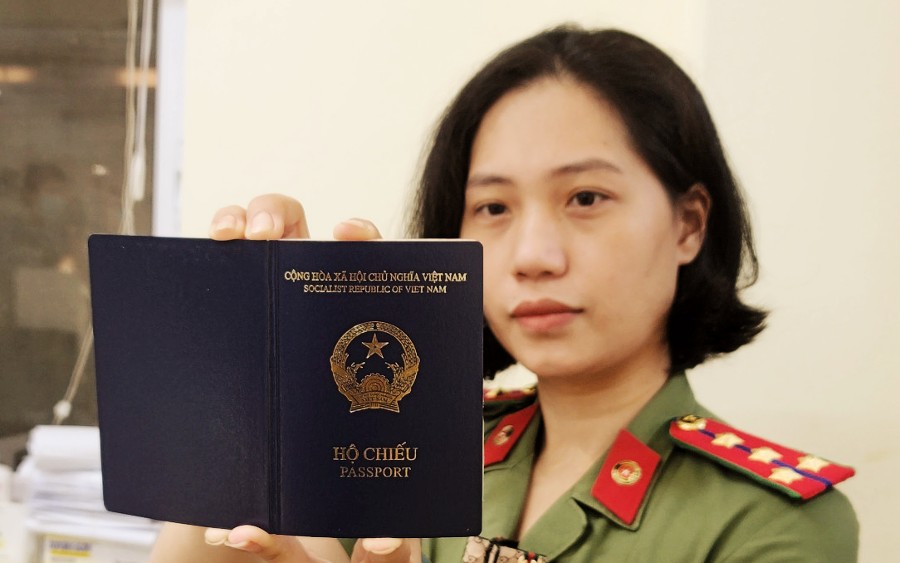
Vietnam has made a notable leap in the global passport rankings, rising seven places in the latest Henley Passport Index for Q3 2025.
Now ranked 84th globally, Vietnam’s passport has seen one of its strongest improvements since the index began tracking travel freedom two decades ago. This upward momentum highlights both the country’s growing international presence and the evolving dynamics of global mobility.
According to the Q3 update released on July 22 by Henley & Partners, Vietnamese passport holders can now access 51 destinations either visa-free or with simplified entry procedures such as e-visas, visa-on-arrival, or electronic travel authorizations (ETAs). This access is measured against a total of 227 destinations worldwide. The current ranking of 84 represents a significant climb from 91 in Q1 2025 and 87 at the end of 2024.
Destinations accessible to Vietnamese citizens without a traditional visa include ASEAN countries as well as Barbados, Bolivia, Chile, Maldives, Kenya, Panama, and Kazakhstan, among others. The growing list of accessible nations underscores Vietnam’s incremental success in negotiating bilateral travel agreements and fostering international cooperation.
Singapore continues to dominate the index, offering visa-free or visa-on-arrival access to 193 destinations—more than any other country. However, citizenship in the city-state remains difficult to obtain, requiring a minimum two-year residency, fulfillment of economic contribution requirements, and—for men—mandatory military service.
South Korea and Japan hold joint second place, with 190 accessible destinations. Meanwhile, major European countries such as Germany, France, Italy, and Spain sit in third with 189. The United Arab Emirates has seen one of the most dramatic ascents, jumping from 42nd to 8th place in a decade. China, too, has made notable gains—rising from 94th in 2015 to 60th in 2025—though it still lacks visa-free access to the Schengen Area.
In contrast, the United States has dropped to 10th place, sharing its position with Iceland and Lithuania—its lowest ranking in the Henley Index’s 20-year history. Analysts attribute this decline to a lack of strategic diplomatic initiatives aimed at expanding visa reciprocity with other countries.
The United States’ slipping rank reflects a broader shift in global soft power. In 2014, the U.S. held the top spot in passport strength; today, it allows visa-free entry to 182 destinations. Due to the Henley Index’s scoring system, which groups countries with equal access into the same rank, 33 nations now surpass the U.S. in global mobility.
Adding to this, a controversial new U.S. domestic regulation has introduced a mandatory “visa bond fee” of at least $250 for non-immigrant visa applicants. The U.S. Travel Association warns that this could further discourage international visitors, potentially harming tourism and global exchange.
Christian H. Kaelin, Chairman of Henley & Partners, emphasized that global mobility is not automatic—it must be earned through active diplomacy and strategic international engagement. Countries that proactively negotiate visa exemptions and uphold reciprocal agreements are more likely to see gains in passport strength. Conversely, nations that fail to engage in such efforts risk being left behind.
Vietnam’s seven-rank jump is a clear signal of its improving global reputation and more assertive diplomatic posture. As Vietnam continues to strengthen its international partnerships, particularly within Asia and emerging markets, its passport could gain even more global leverage in the coming years.
The Henley Passport Index, based on exclusive data from the International Air Transport Association (IATA), remains one of the most authoritative benchmarks of travel freedom worldwide. It is updated biannually in the first and third quarters, with periodic interim updates to reflect real-time policy changes.
For Vietnam, the latest ranking is not merely a number—it represents growing global engagement, enhanced international trust, and new opportunities for its citizens in an increasingly connected world.