
In early June, UNESCO announced 14 new biosphere reserves across 14 countries. This addition brings the total number of reserves in the World Network of Biosphere Reserves to 797, spanning 145 countries and territories. Phong Nha-Ke Bang National Park (Thuong Trach Commune, Quang Tri Province) stands as Vietnam’s sole representative added to this network.
In the first half of the year, the park welcomed 587,401 visitors, a 14% increase compared to the same period last year. This figure includes 469,342 domestic tourists and 118,059 international travelers.
UNESCO emphasizes that the value of Phong Nha-Ke Bang extends far beyond its reputation as a famous tourist destination. The park comprises a limestone mountain system formed approximately 400 million years ago, a massive network of caves and underground rivers, and communities that have lived alongside the forests, rivers, and historical trade routes of the Truong Son range for generations.
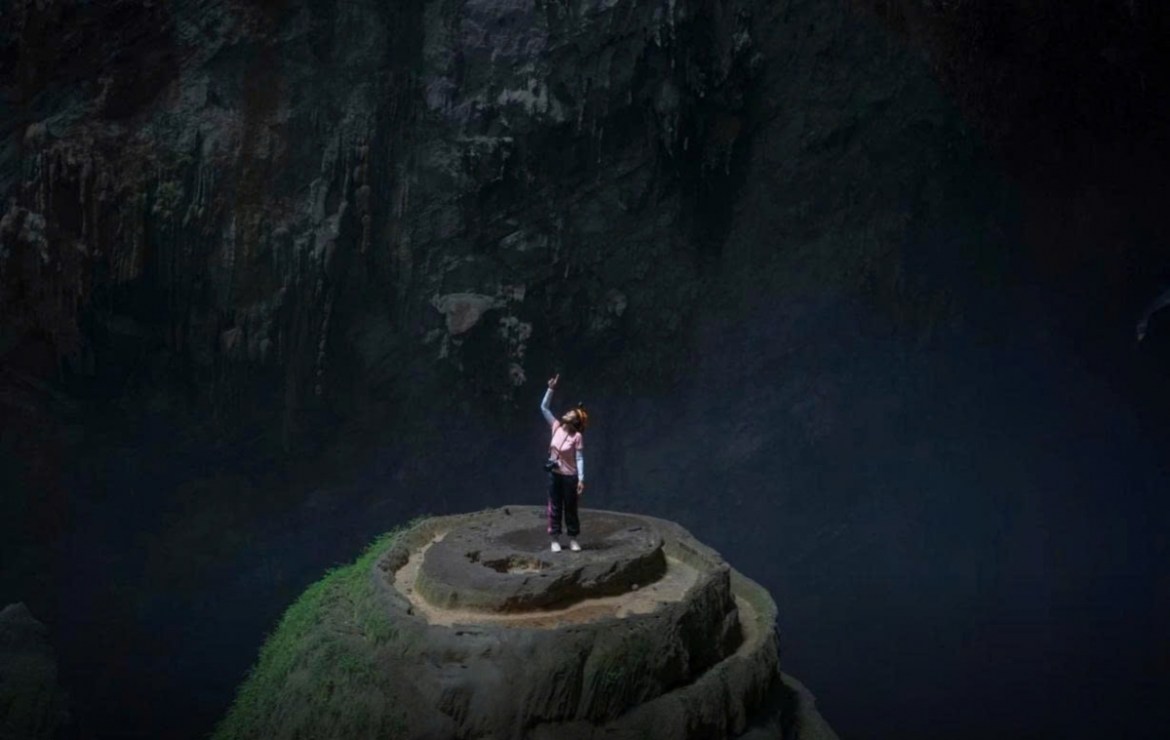
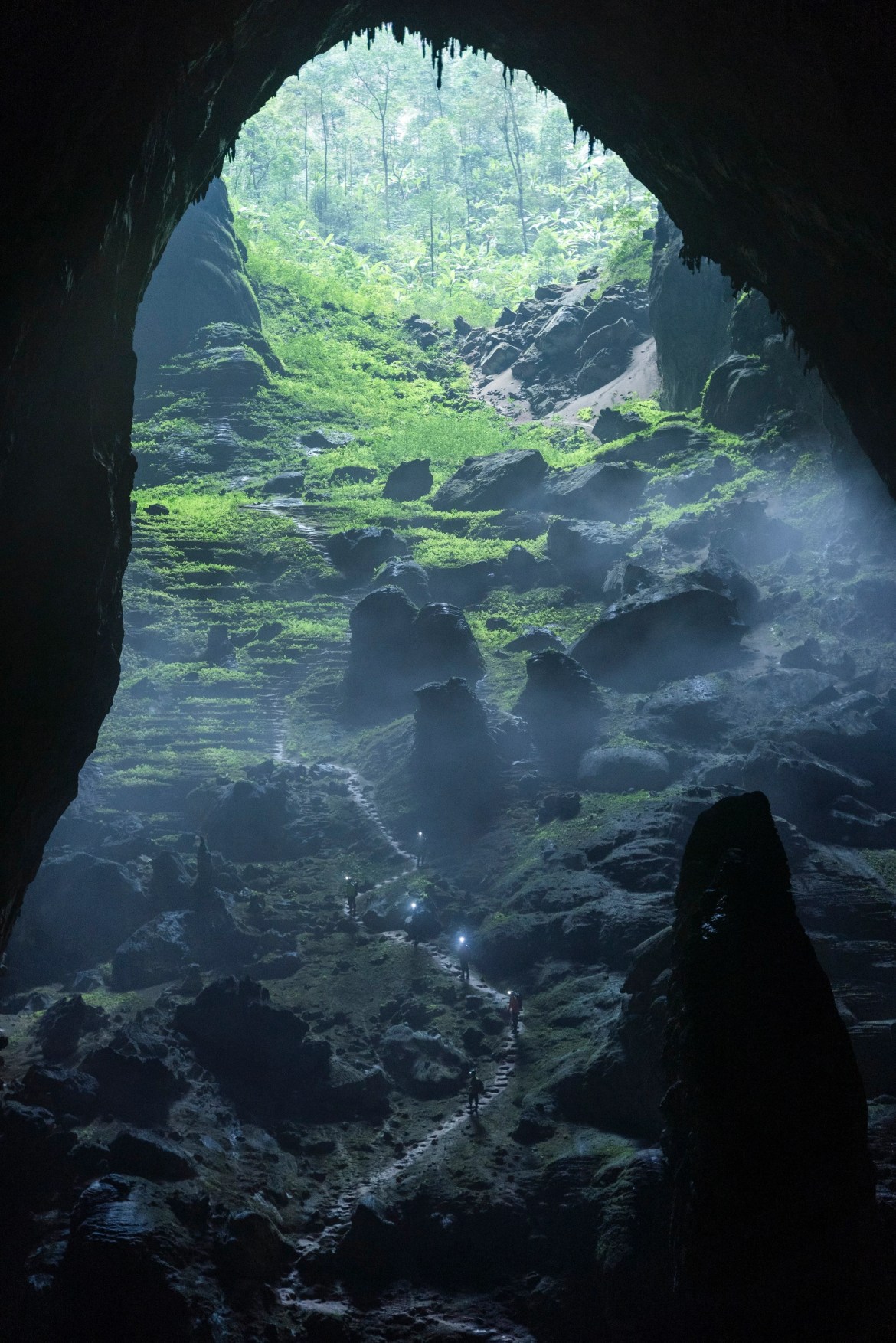
Inside Son Doong Cave, the world’s largest, located in the core zone of Phong Nha-Ke Bang National Park, Thuong Trach Commune, Quang Tri Province. Photo: Linh Huynh/Vietnam.vn
1. A Limestone Landscape 400 Million Years in the Making
While famous for its spectacular cave systems, one of the core values that helped Phong Nha-Ke Bang earn UNESCO recognition is its geological history.
This limestone mountain system formed during the Paleozoic era, about 400 million years ago. Geologists consider it one of the oldest and largest limestone massifs in Asia.
Over hundreds of millions of years, rainwater and underground rivers eroded the limestone, carving out a vast network of caves, sinkholes, valleys, and subterranean rivers. To date, Phong Nha-Ke Bang hosts over 447 caves. Phong Nha, Thien Duong, En, and Son Doong are prominent highlights in this vast system. Here, mountains, forests, and water combine to create one of Asia’s most iconic karst landscapes. In recent years, scientists continue to discover many new caves in the area.

Hang Bi Ky, located about 1,200 meters from the cave entrance, is known as the “main sanctuary” of Phong Nha Cave. (Photo: Quynh Danh)
2. A Region with Multiple UNESCO Accolades
Phong Nha-Ke Bang is not only famous for its cave systems; it is also one of the locations in Vietnam with the most UNESCO milestones.
In 2003, UNESCO recognized the park as a World Natural Heritage site based on its geological and geomorphological values. In 2015, the organization expanded the profile to include values related to ecological processes, biology, and habitats essential for biodiversity conservation.
In 2025, the heritage site expanded to include the Hin Nam No National Park (Laos), becoming the first transboundary World Natural Heritage site in Southeast Asia.
By 2026, Phong Nha-Ke Bang earned its title as a World Biosphere Reserve. This new international title emphasizes the goal of balancing nature conservation, scientific research, environmental education, and sustainable development with the active participation of the local community.
Tourists travel by boat along the Chay River on a journey to explore Dark Cave, part of the Phong Nha-Ke Bang system. (Photo: Quynh Danh)
3. Harmonious Coexistence of Nature and Community
Unlike the World Natural Heritage title, which focuses strictly on natural values, the World Biosphere Reserve designation places humans at the heart of conservation. Spanning over 515,830 hectares—including core, buffer, and transition zones—Phong Nha-Ke Bang is home to over 159,000 residents.
Life here remains deeply tied to the forests, the Son and Gianh rivers, mountain-fringe villages, community-based tourism, and cultural values cultivated over centuries. The region features a rich intersection of Vietnamese, Cham, and Bru-Van Kieu cultures.
UNESCO recognizes this new World Biosphere Reserve as a space for sustainable development. It acts as a model where nature conservation moves hand-in-hand with the preservation of culture, indigenous knowledge, and the livelihoods of local communities.
Related
Discover more from Vietnam Insider
Subscribe to get the latest posts sent to your email.