
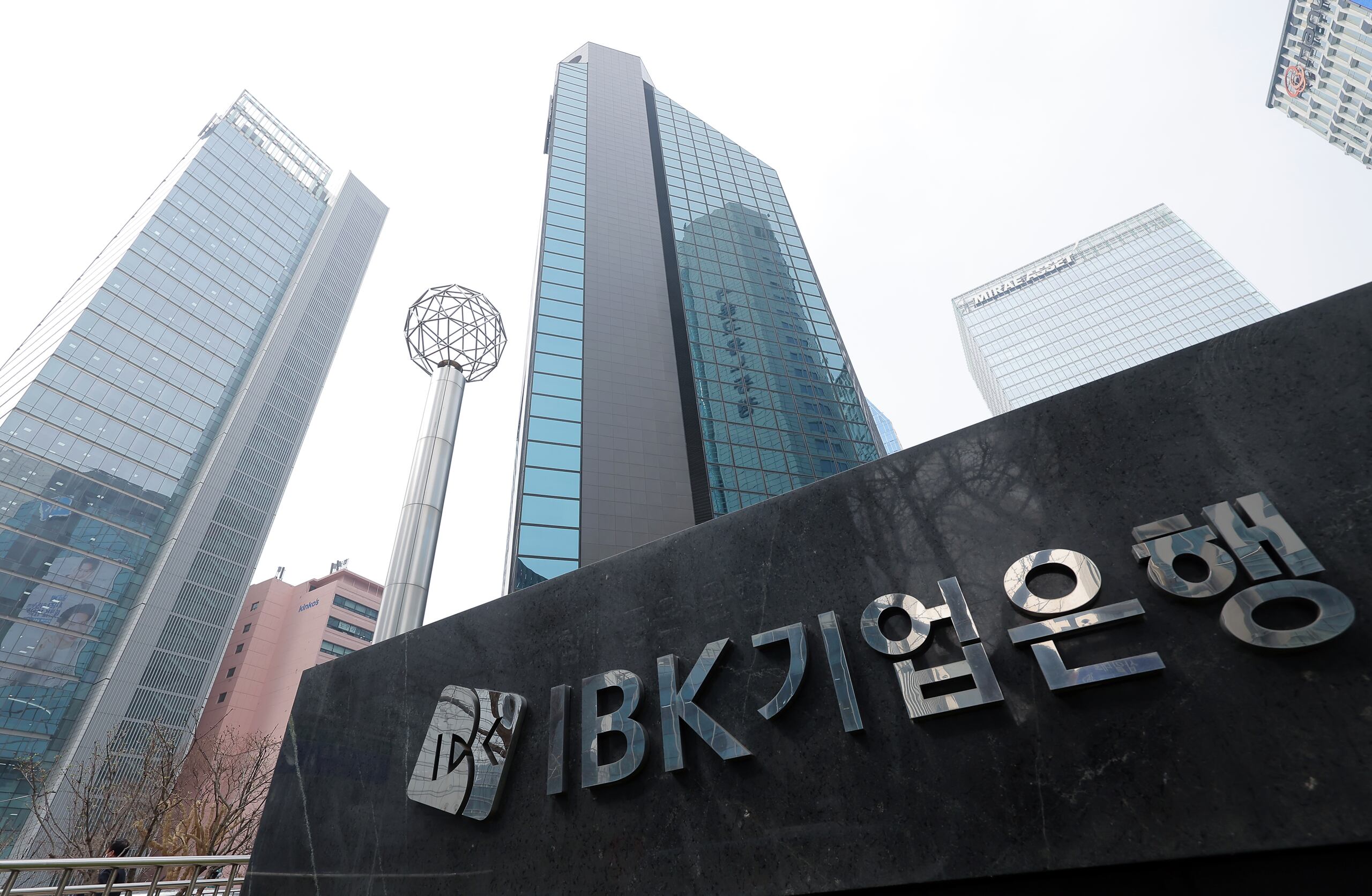
State-backed Industrial Bank of Korea deepens its Vietnam bet as Korean lenders follow manufacturers and SMEs into the market.
South Korea is expanding its financial footprint in Vietnam as trade, manufacturing and investment ties between the two economies deepen. State-backed Industrial Bank of Korea is preparing to launch a wholly foreign-owned bank in Vietnam with VND7.3 trillion ($277 million) in charter capital, becoming the fourth fully Korean-owned bank in the country and reinforcing Vietnam’s growing importance to South Korean businesses expanding across Southeast Asia.
Industrial Bank of Korea Vietnam, or IBK Vietnam, is scheduled to officially begin operations on September 25. The State Bank of Vietnam granted the lender its establishment and operating license on March 24.
The new bank will be headquartered at Keangnam Landmark 72 in Hanoi, one of the capital’s most prominent Korean-invested commercial developments. Park Kyung Il will serve as legal representative and chief executive officer.
Its parent, Industrial Bank of Korea, was established in 1961 and is 68.5% owned by the South Korean government. Unlike purely consumer-focused commercial banks, IBK has historically played a significant role in financing small and medium-sized enterprises—a model that could align closely with the expanding ecosystem of Korean manufacturers and suppliers operating in Vietnam.
South Korea Now Has Four Wholly Owned Banks in Vietnam
IBK’s arrival brings the number of wholly foreign-owned banks operating in Vietnam to 10.
The existing group includes HSBC Vietnam, Standard Chartered Vietnam, Shinhan Bank Vietnam, Hong Leong Bank Vietnam, Public Bank Vietnam, Woori Bank Vietnam, CIMB Bank Vietnam, UOB Vietnam and KEB Hana Bank Vietnam.
South Korean institutions now represent four of the 10: Shinhan, Woori, KEB Hana and IBK.
That concentration reflects a much broader economic relationship.
South Korea has for years ranked among Vietnam’s most important sources of foreign direct investment, with Korean companies establishing extensive operations across electronics, manufacturing, retail, real estate and other industries. Major corporate investments have in turn created demand for banking services spanning working-capital financing, foreign exchange, trade finance, cash management and cross-border transactions.
The expansion of Korean banks can therefore be viewed as another stage in the maturation of the Korea-Vietnam investment corridor: financial institutions are increasingly building local platforms alongside the companies and supply chains they finance.
IBK Is Targeting Vietnam’s SME Economy
IBK says its Vietnamese subsidiary will provide banking and financial services permitted under local law while supporting corporate customers.
Its strategic focus could be particularly relevant to Vietnam’s SME sector.
During a meeting with Vietnamese Deputy Prime Minister Ho Duc Phoc in September 2025, IBK Chairman and CEO Kim Sung Tae said the bank hoped to contribute to Vietnam’s economic development, particularly by supporting small and medium-sized businesses and participating in infrastructure and financial-investment projects. He also discussed plans to establish the wholly owned Vietnamese subsidiary.
That positioning potentially gives IBK two complementary customer bases.
The bank can follow existing Korean companies into Vietnam, particularly manufacturers and their supplier networks, while simultaneously financing Vietnamese SMEs seeking to integrate into Korean and global supply chains.
If executed effectively, that could make IBK’s entry more economically significant than the addition of another foreign retail bank.
Why Foreign Banks Are Increasing Their Vietnam Exposure
Vietnam offers international banks a combination that has become increasingly difficult to find elsewhere in Asia: rapid economic expansion, substantial foreign direct investment, growing manufacturing exports and a population of more than 100 million people with increasing demand for financial services.
The country’s role in global supply-chain diversification is particularly important.
As multinational companies pursue “China+1” strategies and expand production across Southeast Asia, Vietnam has attracted investment in electronics, semiconductors, industrial manufacturing and supporting infrastructure. Korean corporations have been central to that transformation.
Financial services naturally follow those capital flows.
Foreign banks with established relationships with multinational companies can provide financing in Vietnam while connecting local subsidiaries to regional treasury operations, foreign-exchange markets and parent-company banking relationships abroad.
At the same time, competition is intensifying. Vietnam already has a large domestic banking industry, while international lenders from South Korea, Singapore, Malaysia, the UK and elsewhere are competing for corporate and increasingly affluent retail customers.
Vietnam Keeps a High Bar for Foreign Bank Entrants
Establishing a wholly foreign-owned bank in Vietnam requires substantially more than opening a representative office or branch.
Under Vietnam’s amended Law on Credit Institutions and related regulations, foreign financial institutions seeking to establish a wholly owned local bank must meet financial and prudential requirements.
Among other conditions, the foreign parent is generally required to have operated profitably for five consecutive years immediately preceding the application and possess total assets equivalent to at least $10 billion. Institutions must also satisfy capital-adequacy, risk-management and provisioning requirements.
These restrictions are intended to ensure that foreign banks entering Vietnam have sufficient financial strength and governance capacity to operate as locally incorporated credit institutions.
IBK’s VND7.3 trillion capital commitment therefore represents both a regulatory milestone and a long-term strategic investment in the Vietnamese market.
For international investors, the arrival of another major Korean financial institution offers a useful indicator of how Vietnam’s FDI story is evolving. The first phase of foreign investment was dominated by factories and production capacity. The ecosystem around those investments—banks, logistics providers, industrial infrastructure, technology companies and professional services—is now expanding alongside them.
IBK’s September launch may look like another foreign bank entering a crowded market. The bigger signal is that South Korea’s financial infrastructure is increasingly following its industrial infrastructure into Vietnam—and that suggests Korean capital is preparing for a much longer presence in one of Southeast Asia’s fastest-growing economies.
Related
Discover more from Vietnam Insider
Subscribe to get the latest posts sent to your email.
Source: Vietnam Insider