
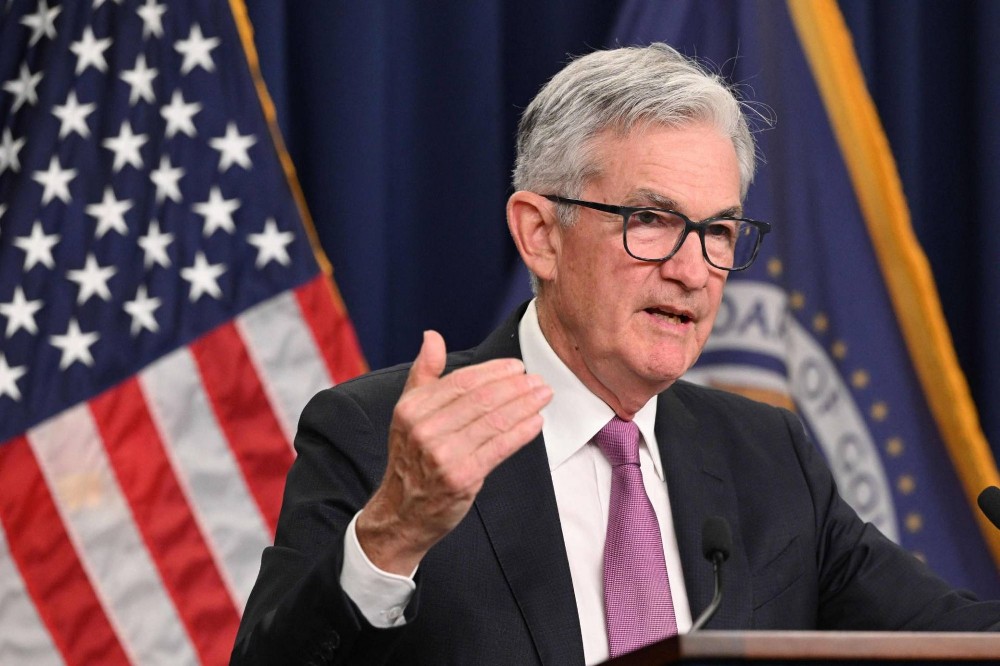
As the U.S. Federal Reserve signals the start of a global easing cycle, Vietnam’s markets stand to benefit through stronger currency stability, lower domestic rates, and renewed foreign investment inflows.
HANOI — The Federal Reserve’s latest interest rate cut is rippling through emerging markets — and Vietnam is among the biggest potential beneficiaries. Analysts say the move could ease pressure on the Vietnamese đồng (VND), lower domestic borrowing costs, and attract fresh foreign investment into one of Asia’s fastest-growing economies.
Last week, the Fed reduced its benchmark rate for the second consecutive meeting to 3.75%–4%, while announcing an end to its balance sheet tightening program (quantitative tightening). The policy shift weakened the U.S. dollar and triggered a reassessment of global capital flows — a development that many economists say could give Vietnam valuable breathing room.
Easing Pressure on USD/VND Exchange Rate
The most immediate impact is likely on the USD/VND exchange rate, which has faced persistent pressure in recent months due to trade deficits and capital outflows.
“Fed’s rate cut helps reduce the strength of the U.S. dollar, which in turn eases stress on the Vietnamese đồng,” said Dr. Trần Hoàng Ngân, a leading economist and member of the National Financial and Monetary Policy Advisory Council. “This supports macroeconomic stability and creates room for lower domestic interest rates in the near term.”
According to Maybank’s latest forecast, the USD/VND exchange rate is expected to stabilize toward the end of the year as global monetary conditions loosen further. This comes at a crucial time: Vietnam faces potential U.S. tariffs of up to 25% on certain exports in 2025, heightening the importance of maintaining foreign currency reserves and trade surpluses.
The State Bank of Vietnam (SBV) is likely to benefit from improved foreign exchange supply thanks to steady inflows of foreign direct investment (FDI) and remittances, both of which tend to strengthen when the U.S. dollar weakens.
Lower Interest Rates, Stronger Growth Outlook
The Fed’s pivot also opens a “window of opportunity” for the SBV to further reduce domestic interest rates. Analysts expect two rate cuts of 25 basis points each in 2025, providing relief to businesses and consumers after a period of tight credit conditions.
“Lowering the interest rate differential between the VND and USD will reduce exchange rate pressure and lower the cost of foreign-currency borrowing,” noted Dr. Nguyễn Trí Hiếu, a veteran banking expert. Foreign currency loans currently account for 6.4% of Vietnam’s total outstanding credit.
Cheaper borrowing costs could stimulate investment and consumption, supporting Vietnam’s GDP growth target of 8% next year while keeping inflation below 5%. The OECD also expects lower global rates to boost U.S. import demand, a boon for Vietnam’s export-driven economy — exports to the U.S. rose 25.4% year-on-year in the first eight months of 2024.
Boost to Capital Markets and Investor Confidence
Perhaps the most visible effect will be in Vietnam’s stock and bond markets, which have already shown early signs of renewed foreign investor appetite.
“Fed’s rate cut signals the start of a global easing cycle, which is positive for emerging markets like Vietnam,” said Nguyễn Quang Huy, former head of the State Securities Commission’s Market Development Department. “It could accelerate Vietnam’s potential upgrade to emerging market status by FTSE Russell, enhancing global investor visibility.”
Foreign funds have already begun to return to Vietnamese equities, with net inflows resuming since September 2024 after several quarters of outflows. The VN-Index, currently trading at an attractive valuation relative to regional peers, could see further upside if the trend continues.
Meanwhile, lower global yields may also encourage foreign bond investors to seek higher returns in Vietnam, where government bonds still offer comparatively attractive yields and currency stability.
Outlook: Vietnam Well-Positioned Amid Global Easing
With the U.S. entering a new phase of monetary easing, Vietnam’s policy flexibility improves significantly. The combination of a weaker USD, lower interest rates, and stronger FDI inflows creates a supportive backdrop for the country’s macroeconomic resilience.
For international investors, the message is clear: Vietnam stands out as one of Asia’s most promising beneficiaries of the Fed’s pivot — combining currency stability, growth momentum, and an increasingly sophisticated capital market.
Key Takeaways for Investors:
- USD/VND Stability: Pressure on the Vietnamese đồng likely to ease through year-end.
- Rate Cuts Ahead: SBV expected to follow with two 25 bps cuts in 2025.
- Equity Upside: Renewed FII inflows could drive VN-Index and accelerate FTSE Russell upgrade.
- Macro Outlook: GDP target 8%, inflation below 5%, strong export rebound led by U.S. demand.
Vietnam is poised to be one of the biggest emerging-market winners from the Fed’s rate cuts — a compelling mix of macro stability, growth potential, and renewed foreign investor optimism.
Related
Discover more from Vietnam Insider
Subscribe to get the latest posts sent to your email.
Source: Vietnam Insider