
This report is from this week’s CNBC’s The China Connection newsletter, which brings you insights and analysis on what’s driving the world’s second-largest economy. You can subscribe here.
The big story
Instead of trumpeting China’s tech advances, Premier Li Qiang struck an uncharacteristically somber tone during a nationwide address on policy plans.
I’ve heard him speak in person several times over the years, including his first and only press conference as premier in 2023, and he’s as motivational as Chinese politicians can be. But his candid portrayal of challenges and tech goals on Thursday was far more measured in tone.
That signals one thing: Whatever the geopolitical situation or state of the economy, China sees technology as the key to its future.
To get there requires a departure from China’s state-dominated economic preferences. Businesses and investors also need encouragement, as it wasn’t too long ago that Beijing was tightening oversight of tech companies.
But changes are happening. One senior official told reporters over the weekend that businesses need to take a greater lead in helping policymakers figure out which tech challenges are worth solving and in evaluating research outcomes.
Industrial policy debate
It’s quite a shift from Beijing’s top-down industrial policy — a model that’s started to gain admirers. The approach has stirred anxiety in Washington, which has tried to pursue its own version with the CHIPS and Science Act.
But excessive state participation hasn’t been good for China’s aircraft ambitions, according to a report published last week by Scott Kennedy of the U.S.-based think tank Center for Strategic and International Studies.
Instead, he said, where China’s private sector has taken the lead, such as in electric vehicles, rapid advances have bolstered Beijing’s status globally as a tech power.
State-organized infrastructure still matters. Government-built charging stations helped electric cars go mass market.
Now, China is rolling out computing power for its homegrown AI companies as part of its 15th five-year development plan that kicked off in January.
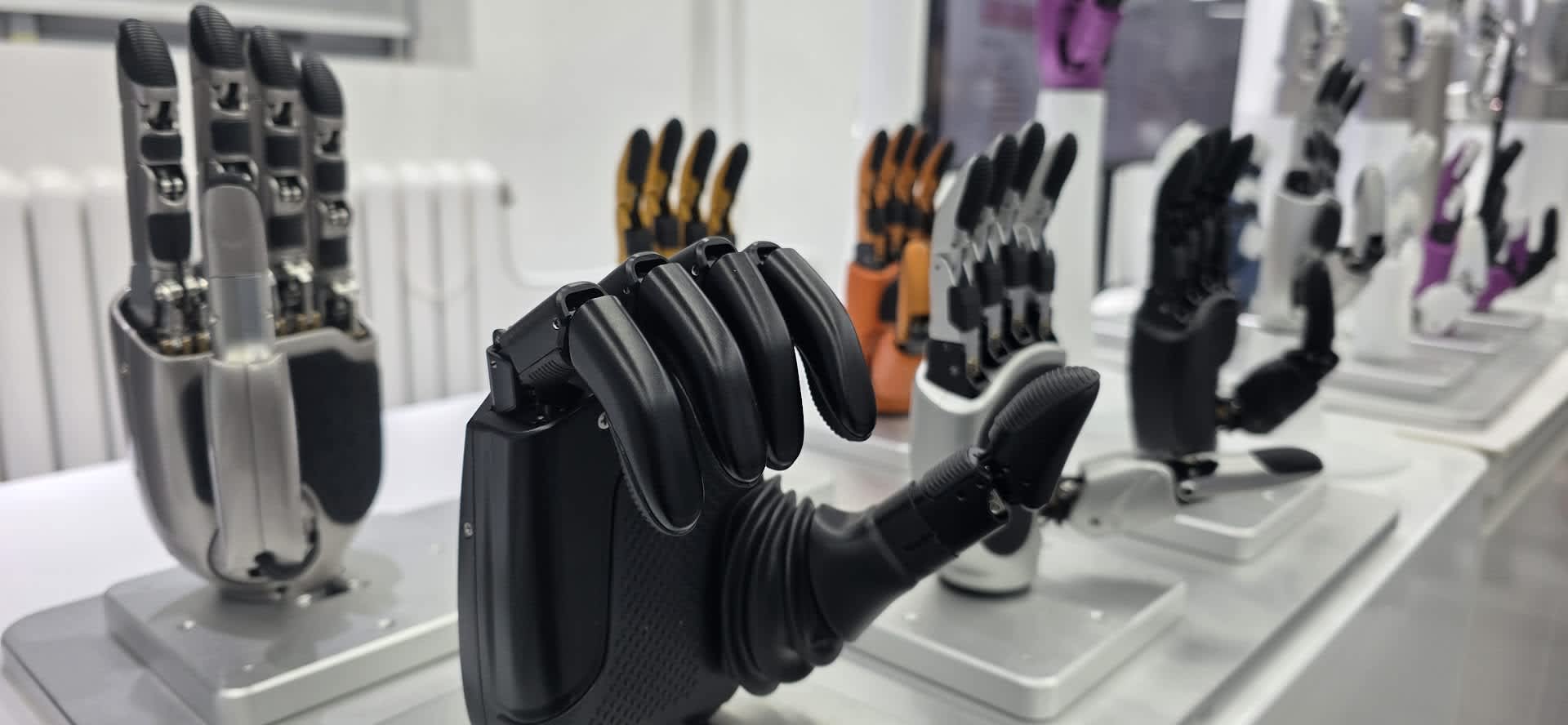
But innovation is already happening in the private sector. Last week, just before Li’s speech, I stopped by the offices of Beijing-based startup Linkerbot. The company has been making mechanical hands for humanoid robots that have gained global attention over the past year.
The company pushed back on the idea that it would benefit from specific policy support. Instead, the startup said overall industrial development has enabled its tech to move quickly from research labs to actual business use.
Linkerbot said its robotic hands are sold not just in China but also to customers in Europe, Japan and South Korea. And in a refrain I’m hearing more often, Linkerbot claims production times at least one-sixth those of foreign rivals, at one-tenth the price.
Forced transformation
Beijing’s pivot toward giving the private sector more leeway traces back to last February, when President Xi Jinping met with tech entrepreneurs.
But change at a deeper level takes time and resources that the government may not always have.
Liqian Ren of Wisdom Tree summed up Beijing’s attitude as: “We don’t have much money to help you, so you are pretty much on your own, but we are not going to crack down on you.”
Investors are also getting a clearer sense of where Beijing’s red lines are, such as in monopolistic or hyper-competitive behavior. At the same time, private companies still have their own profit-driven incentives and remain a critical source of employment in China.
Ironically, the electric car push has also forced traditional state-owned giants to adapt, or risk further eroding their market leadership by BYD and other upstart companies.
State-owned Changan Automobile has responded by working with Huawei on in-car technology. The collaboration helped the company climb to third place in China’s new energy vehicle rankings by domestic sales last year, ahead of Tesla.
The technological advances have gained international attention.
Changan, based in the southwestern metropolis of Chongqing, said that over the past year, it has hosted a slew of government delegations, industry partners and customers from Europe, Southeast Asia, the Middle East and Latin America.
In about a month, a U.S. delegation of more than 100 young science and technology professionals is traveling to the city, said Chen Wei, chair of Chongqing-based fintech company Yucun Keji.
Chen, who will be presenting to the U.S. delegation, is also one of Chongqing’s representatives to the National People’s Congress, as is Changan’s Chairman Zhu Huarong.
It’s the kind of state-vs.-private-market dance that businesses in China have long had to navigate.
But this year, the stakes are higher. With tariffs, war abroad and slowing growth at home, China’s tech companies bear a growing national responsibility. It’s one that Beijing won’t want to discourage.
Need to know
U.S.-China talks. China’s top diplomat Wang Yi didn’t confirm a Trump trip to Beijing, but said the two sides need to make “thorough preparations” for the existing “agenda of high-level exchanges.”
Lowest GDP target. China aims to achieve economic growth of between 4.5% to 5% this year, the slowest goal since records began in the 1990s.
BYD sales slump. The Chinese EV giant saw sales plunge more than its rivals to start the year, ahead of its March 5 release of a more powerful car battery.
Coming up
March 12: China’s National People’s Congress ends its eight-day meeting
March 16: China retail sales, industrial production and investment data for January and February
Source: CNBC