
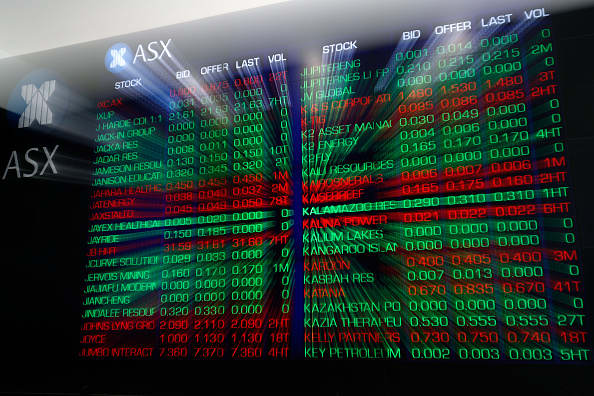
An electronic board displays stock information at the Australian Securities Exchange, operated by ASX Ltd. on March 16, 2020 in Sydney, Australia.
Brendon Thorne | Getty Images
SINGAPORE — Asia-Pacific markets looked set to trade on a cautious note Thursday, despite a relatively strong finish on Wall Street overnight after U.S. lawmakers passed a $1.9 trillion coronavirus relief package.
Australian shares were little changed in early trade, with the benchmark ASX 200 trading near flat. Shares of major miners Rio Tinto and BHP fell 1.22% and 2.48%, respectively.
Nikkei futures pointed to opening gains in Tokyo but the Japanese market has struggled to hold onto gains recent sessions.
Overnight in the U.S., the passing of the new stimulus package spurred investors to snap up stocks that will be boosted by a faster recovery from the pandemic. The Dow Jones Industrial Average rose more than 400 points while bond yields fell.
President Joe Biden hopes to sign the relief bill on Friday.
Investors will shift focus to Europe where the European Central Bank is due to meet Thursday. ECB officials in recent weeks have reportedly described the rise in bond yields as “unwarranted tightening” and a situation that needs to be monitored closely.
“In response to rising bond yields, we expect it will signal readiness to step up its weekly bond interventions if necessary and use the full Pandemic Emergency Purchase Programme envelope (EUR1.85trn), and more if required,” analysts at ANZ Research wrote in a Thursday morning note.
“The ECB will also play down temporary strength in euro area inflation, focusing on the medium-term outlook,” the analysts said.
Currencies and oil
In the currency market, the U.S. dollar last traded at 91.823 against a basket of its peers, withdrawing from levels above 92.00 reached earlier in the weeks.
The Japanese yen changed hands at 108.43 per dollar while the Australian dollar traded near flat at $0.7730.
Oil prices recovered overnight and traded up Thursday during Asian trading hours. U.S. crude rose 0.45% to $64.73. That was despite a sizeable jump in U.S. crude inventories following last month’s winter storm in Texas.
Source: CNBC