
Hello, this is Anniek Bao writing to you from Singapore.
Markets open and close every day. Today, the Daily Open will close for the final time.
Thank you for making us part of your morning routine. From interest rates and market swings to the rise of AI, we hope we’ve helped make sense of the biggest business stories and given you something enjoyable to read along the way.
From Monday, you will be receiving Morning Squawk, which is your daily look at the news shaping markets and business. If you would like to unsubscribe, you can click here.
It’s been a pleasure writing for you, truly, and thank you for reading.
— Lim Hui Jie, Leonie Kidd, Anniek Bao and Justina Lee
What you need to know today
Markets are digesting the tech rout on Wall Street with the Nasdaq Composite index falling 2.6% for its worst day since early July on renewed doubts over AI spending.
In Seoul, SK Hynix shares rebounded 2.6% after the company scrapped plans for a U.S. listing of its Solidigm unit, recovering from an early dip below 1.2 million won ($905). Regulators had said the plan ran afoul of dual-listing rules, and SK Hynix cited market conditions while saying it will keep exploring financing for a new U.S. fab.
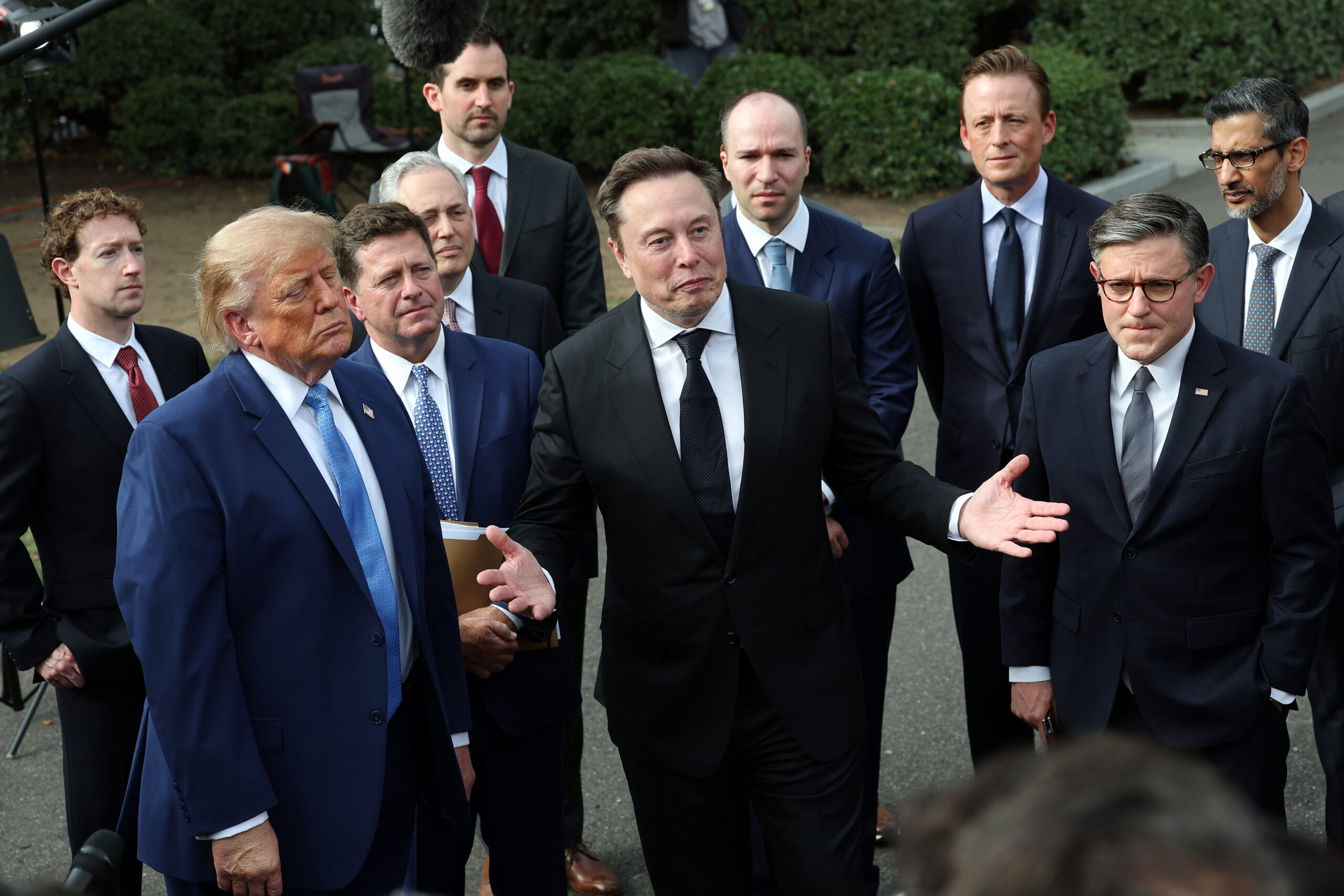
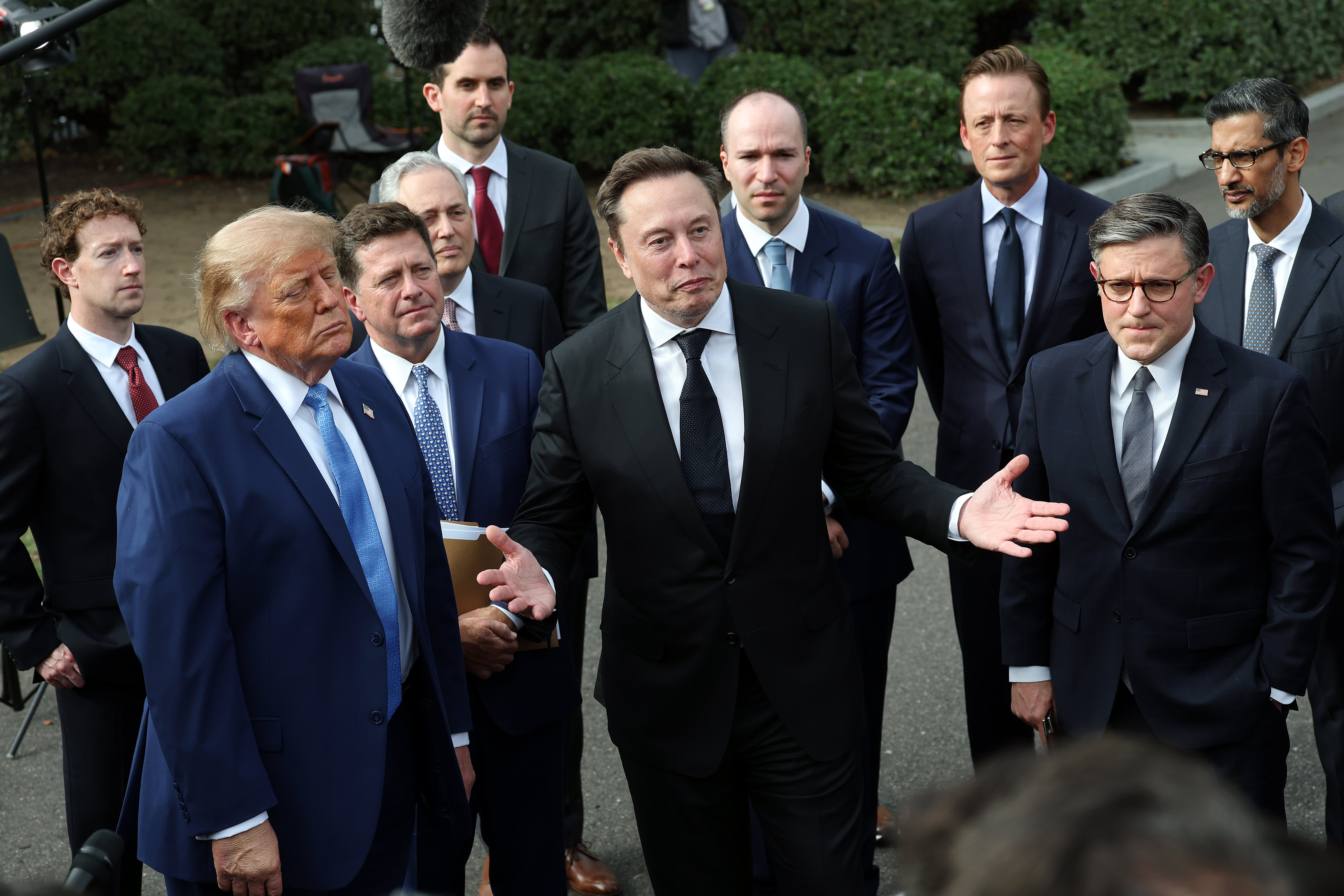
Elon Musk’s empire was also in focus. President Donald Trump called Musk and asked him to lift restrictions that had slowed Ukraine’s use of Starlink and hampered its drone operations, the Wall Street Journal reported. Trump said access has been restored, though Ukrainian President Volodymyr Zelenskyy said speeds aren’t fully back.
SpaceX booked a $561 million unrealized gain on its stake in Musk’s Boring Co. in the third quarter, lifting net income to about $4.4 billion. The non-cash markup followed a September Boring fundraising round, and SpaceX still shows a $413 million net loss for the first nine months.
Musk is also spending heavily on politics, putting about $366 million into this election cycle, including $276 million since July, mainly to keep Republicans in control of Congress, according to the New York Times. That likely makes him the largest single donor in this year’s races, and House Democrats have already called for investigations into SpaceX’s government contracts.
Back in tech, Nvidia CEO Jensen Huang said neocloud demand is “off the charts.” He told CNBC at GTC in Berlin that “the demand of the capital is much greater than the availability of the capital,” though he expects the gap to be solved.
Money is moving the other way for China’s wealthy, who are shifting offshore funds into U.S. banks as Beijing widens its tax net, with private bankers and lawyers reporting a jump in inquiries since July. Beijing set an Oct. 22 deadline to declare offshore trust income, taxed at 20%.
In Japan, core inflation rose to 2.1% in September from 1.7% in August, the highest this year and above the Bank of Japan’s 2% target. The reading matched forecasts, with the Bank of Japan expected to hold at next week’s meeting and a December hike still in play.
— Anniek Bao
And finally…
AI debt and French bonds face a stress test — why it may not be over
From AI companies financing data center projects to France’s heavily indebted government, credit markets are flashing warnings as investors grow warier of borrowing risks.
Five-year credit default swap spreads have widened for CoreWeave, Oracle and SoftBank Group, as well as France and Italy, according to CNBC’s analysis of FactSet data.
AI-related bonds have been selling off as markets raise the cost of capital amid concerns of a financing crunch. Neocloud demand is “off the charts,” Nvidia CEO Jensen Huang told CNBC on Thursday, but he warned of a “scarcity of capital.” “The demand of the capital is much greater than the availability of the capital,” he said, adding, “that’s going to get solved.”
— Deena Zaidi, Christopher Hayes
Source: CNBC