
South Korean defense stocks saw massive gains on Tuesday after the country’s markets returned from a public holiday, as the Iran war fuels interest in defense names globally.
Heavyweight Hanwha Aerospace, which is South Korea’s largest defense manufacturer, saw shares surge nearly 25%, before paring gains to about 20%, while Korea Aerospace Industries gained more than 12%, but cut those to 3.2%.
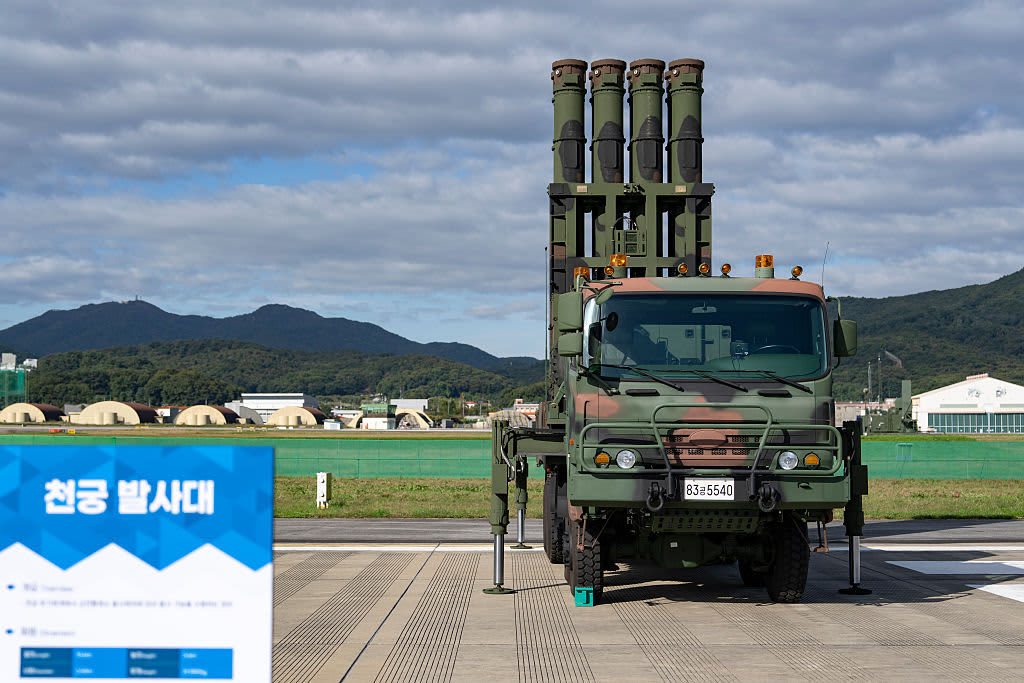
Shares in air defense systems maker LIG Nex1 soared 30%, while electronic warfare systems manufacturer Victek and anti-aircraft missile components’ maker Firstec saw shares rise 30% and 19%, respectively.
Ammunition manufacturer Poongsan rose 12.78%, while Hyundai Rotem, maker of the K2 main battle tank, advanced over 8%.
The sector’s gains were in sharp contrast to the wider Kospi, which fell 7.24% to lead losses in Asian markets and record its worst day in 19 months.
South Korea’s prominence in the global defense space has been rising since the Ukraine-Russia conflict, with the country aiming to be the world’s fourth largest defense industry by 2030.
Orders from European nations such as Poland and Romania have powered massive gains in the sector as countries on the continent increase their defense spending.
Global defense stocks soared Monday as investors reacted to a dramatic military escalation in the Middle East.
In Europe, Germany’s Hensoldt and Britain’s BAE Systems were among the top performers in the Stoxx 600, up close to 5% and around 6%, respectively.
Stateside, U.S. firms Lockheed Martin and Northrop Grumman rose more than 3% and about 6%, respectively.
— CNBC’s Elsa Olhen contributed to this report.
Source: CNBC