
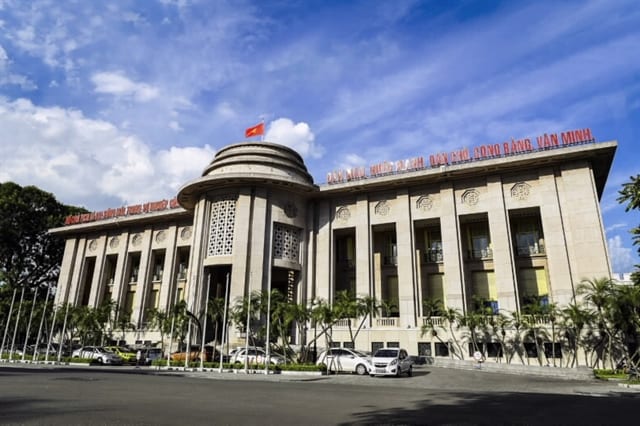
The State Bank of Vietnam (SBV), the nation’s central bank, announced on Tuesday its commitment to maintaining flexible monetary policies throughout the remainder of the year, with a clear emphasis on fostering economic growth.
This directive comes as global economic uncertainties continue to cast a shadow, influencing Vietnam’s economic trajectory and posing challenges to its ambitious growth targets.
Deputy Governor Pham Thanh Ha articulated that persistent global financial and monetary market risks are exerting pressure on Vietnam’s monetary policy management, particularly concerning exchange rates and interest rates. Despite these external pressures, the SBV remains resolute in its pursuit of an economic growth rate of at least 8% for the current year.
To facilitate this growth, the central bank plans to intensify efforts to encourage commercial banks to reduce operational costs and accelerate their digital transformation initiatives. These measures are intended to create a conducive environment for further reductions in lending rates, thereby making capital more accessible and affordable for businesses. Concurrently, the SBV will guide banks to boost lending in a “safe and effective” manner, specifically channeling funds towards productive and business-oriented projects. This strategic allocation of credit aims to stimulate key economic sectors. As of the end of June, total outstanding loans from banks had already seen a robust increase of 9.9% compared to the end of last year, indicating an active lending environment.
The SBV’s proactive stance highlights a critical balance Vietnam aims to strike: safeguarding macroeconomic stability while aggressively supporting economic expansion. The emphasis on lowering lending rates and directing credit towards production and business activities is a direct effort to inject liquidity into the economy, stimulate investment, and bolster domestic demand. For international investors and businesses, this signals a government keen on maintaining a supportive financial environment, even in the face of global volatility. The focus on digitalization within the banking sector also suggests a long-term commitment to enhancing efficiency and streamlining financial services, potentially benefiting foreign enterprises operating or planning to operate in Vietnam.
Analysts are closely watching how Vietnam’s monetary policy flexibility will navigate the delicate interplay of global financial shifts and domestic growth imperatives. The push for cost-cutting and digitalization within banks is seen as a necessary structural reform to enable sustainable interest rate reductions without compromising financial stability. The robust credit growth observed in the first half of the year indicates a healthy appetite for borrowing, which, if channeled effectively into productive sectors, could indeed contribute significantly to the 8% growth target. However, managing exchange rate stability amidst external pressures will remain a key challenge for the central bank.
Looking ahead, the SBV’s commitment to prioritizing growth, coupled with its flexible monetary policy approach, sets a clear direction for Vietnam’s economic management in the latter half of the year. The upcoming months will reveal the effectiveness of these measures in mitigating external risks and realizing the ambitious growth target. Continued efforts to optimize lending conditions and strategically direct capital will be crucial for maintaining Vietnam’s economic momentum and solidifying its position as an attractive destination for business and investment.
Related
Discover more from Vietnam Insider
Subscribe to get the latest posts sent to your email.
Source: Vietnam Insider